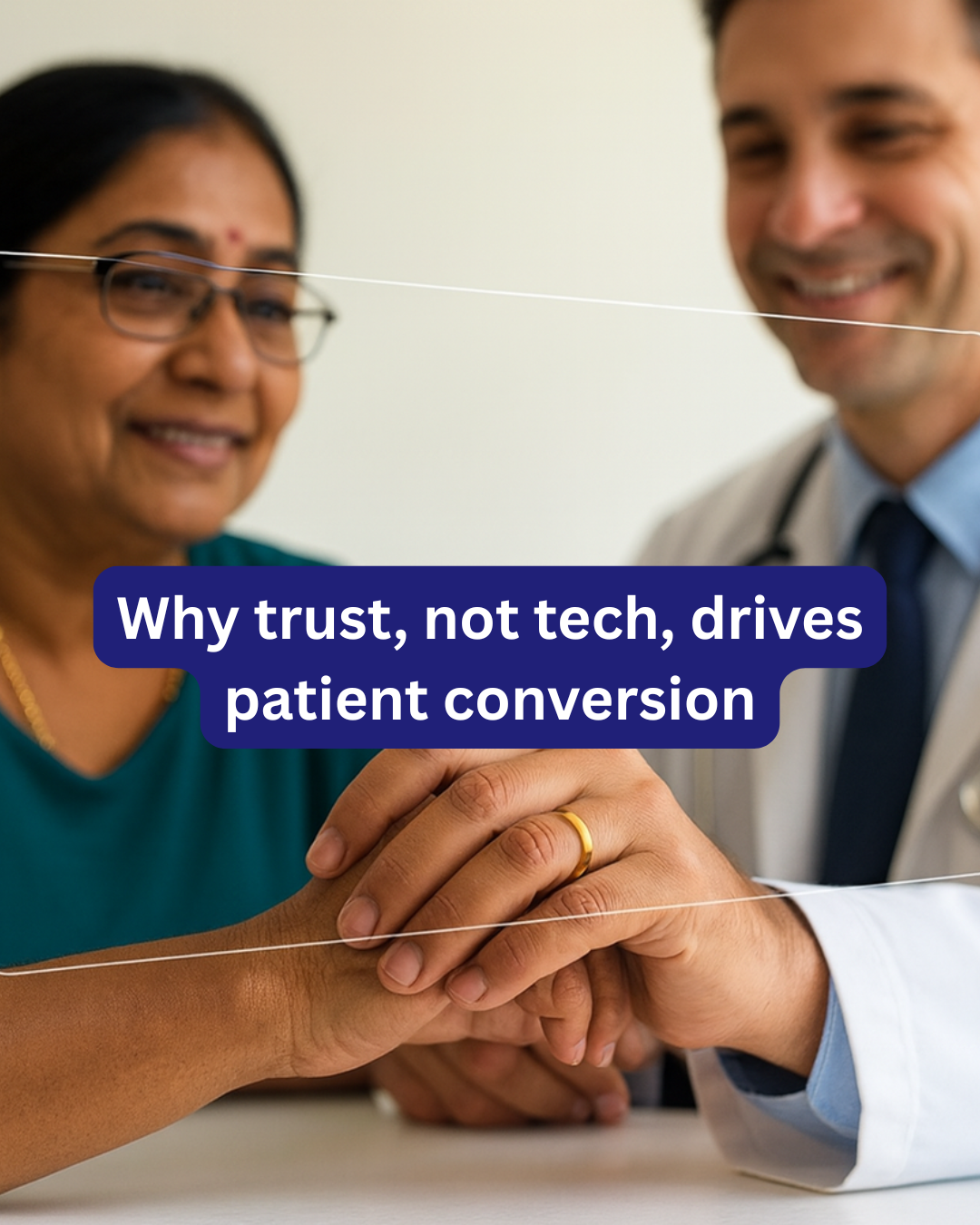
In a world obsessed with apps, AI tools, automated reminders, and digital funnels, many doctors assume that better technology will automatically convert more patients. But here’s the reality: technology can capture attention, streamline processes, and increase visibility, but it cannot replace the one thing that truly makes a patient say “yes.”
That thing is trust.
That thing is trust.
No matter how advanced the digital tools become, patients still choose doctors based on how safe, understood, and confident they feel in their care. Tech may bring them to your door, but trust is what makes them walk in.
Technology Can Attract Patients, But Only Trust Converts Them
You can have the best-designed website, highest-quality ads, or thousands of followers online. However, patients do not choose a doctor based solely on how polished the marketing looks. They choose based on the belief that you care, that you listen, and that you know what you’re doing.
Many doctors invest in digital tools before investing in patient relationships. The result? close attention, poor conversion. Because ultimately, technology communicates information, but trust communicates certainty.
What Patients Actually Look For
Patients aren’t evaluating you with metrics. They’re evaluating you with emotion. When they browse online or check your profile, they’re asking silently:
- “Does this doctor understand what I’m going through?”
- “Will they judge me or genuinely help me?”
- “Can I trust them with my health?”
- “Do other patients feel safe with them?”
No AI ads or appointment software can answer these questions for you. Only your brand, content, and interactions can.
Why Trust Outperforms Technology Every Time
Here are the real reasons tech alone fails, and trust succeeds:
- Patients don’t seek the smartest doctor, they seek the safest one.
Safety is built through empathy, clear communication, and consistent value, not tools. A doctor who listens well converts more than a doctor with the best website. - Credibility beats convenience
Convenience brings patients to your profile. Credibility makes them book.
Testimonials, clear explanations, patient stories, and your personality do far more than any automation. - Trust reduces hesitation
Most patients delay decisions because of fear: fear of pain, cost, judgment, or misinformation.
Trust removes fear.
When people feel heard, they take action faster. - Algorithms push content; trust pulls patients.
Tech can amplify reach, but trust creates loyalty. A trusted doctor doesn’t need to “go viral”; their patients advocate for them constantly. - In healthcare, trust is the product.
Medicine is personal. Patients are literally giving you access to their bodies and lives. Without trust, no amount of automation can close that psychological gap.
How Doctors Can Build Trust in a Digital World
Here are practical ways to turn visibility into conversions:
- Show your face and voice online.
Patients trust humans, not logos. Videos, photos, and personal stories build instant connection. - Educate simply and clearly.
Break down medical concepts in ways people can understand. Clarity builds authority. - Use real patient stories (with consent)
Storytelling is the strongest trust builder. Nothing convinces patients more than seeing others like them helped. - Respond authentically
Instead of generic, polished posts, show empathy. A caring tone beats a perfect script. - Maintain consistency
Trust compounds through repetition. The more regularly you show up, the more reliable you appear. - Prioritize transparency
From procedures to pricing to outcomes, transparency builds a strong foundation.
Tech Is the Tool, Trust Is the Trigger
Technology is powerful; it organizes your clinic, automates communication, spikes your visibility, and improves efficiency. But no patient books because of efficiency alone. They book because they believe in you.
And belief is earned through:
- empathy
- honesty
- clear communication
- credibility
- consistency
Not through fancy software.
Final Takeaway
If you want to convert more patients, don’t start with tools. Start with trust.
Tech amplifies your message, but trust is what makes that message matter. When patients feel understood, safe, and valued, they don’t just convert, they stay, they refer, and they advocate for you.
In healthcare, trust isn’t part of the strategy. It is the strategy.