A patient-centered funnel is not about selling.
Instead, it guides people step by step from confusion to clarity, and then to confidence and care.
Because of this, it builds trust, improves communication, and creates a more humane experience.
In today’s healthcare world, a patient-centered funnel helps people feel safe, informed, and supported long before they book an appointment.
Instead, it guides people step by step from confusion to clarity, and then to confidence and care.
Because of this, it builds trust, improves communication, and creates a more humane experience.
In today’s healthcare world, a patient-centered funnel helps people feel safe, informed, and supported long before they book an appointment.
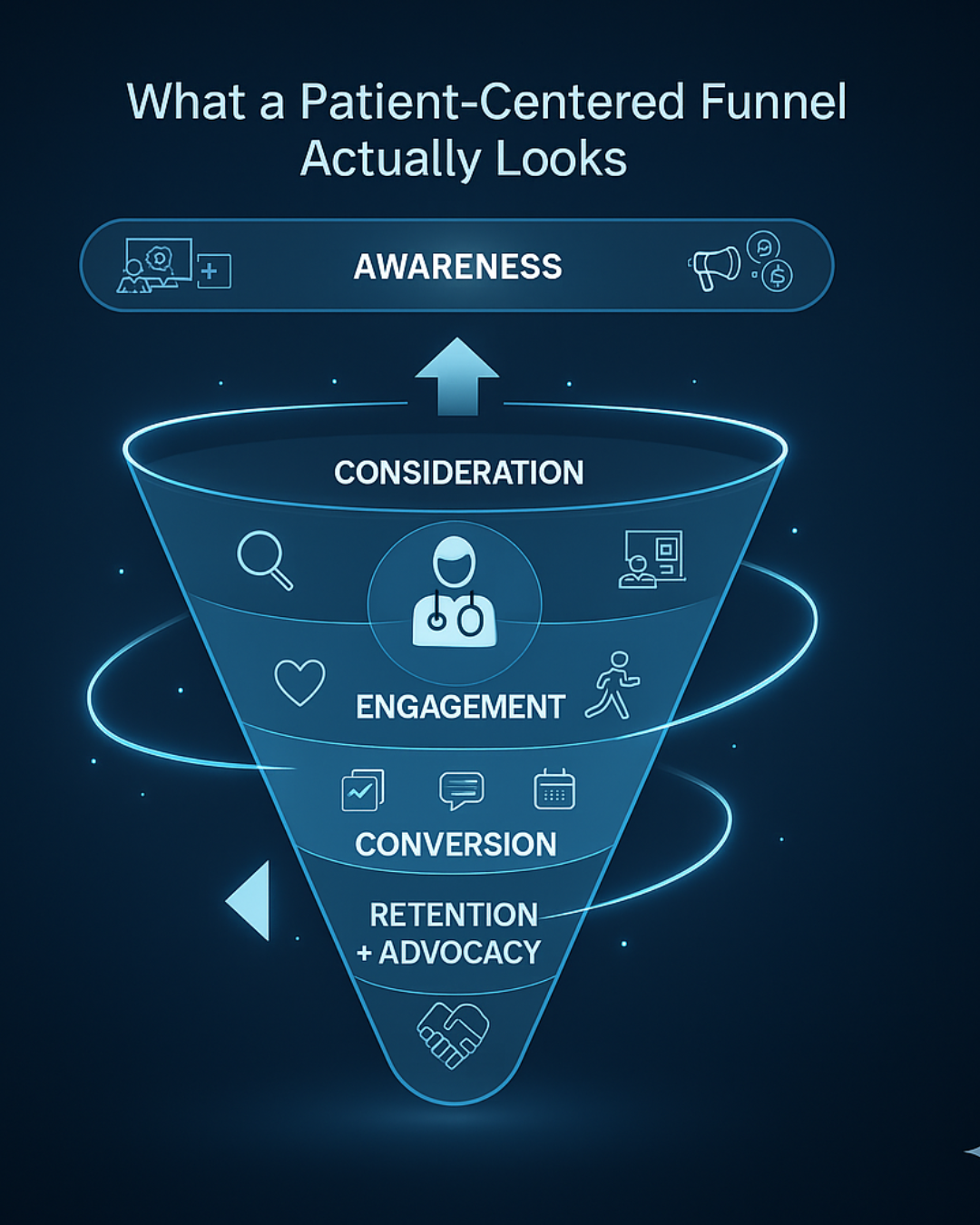
Below is what a true patient-centered funnel looks like.
1. Awareness: Answer the Questions Patients Already Have
Patients do not begin their journey by searching for a doctor.
Instead, they search for answers to what they are feeling.
Instead, they search for answers to what they are feeling.
During this stage, patients want:
- simple explanations of symptoms
- basic condition guides
- reassurance-based advice
- short videos that reduce fear
- clear, easy-to-understand posts
Your goal is to reduce fear, increase understanding, and build early trust.
This is important because most doctors skip this stage, even though this is where trust truly begins.
This is important because most doctors skip this stage, even though this is where trust truly begins.
2. Consideration: Show Expertise Without Overwhelming People
Once patients feel understood, they begin evaluating expertise.
However, they are not looking for advertisements.
They want clarity and confidence.
However, they are not looking for advertisements.
They want clarity and confidence.
At this stage, patients look for:
- diagnosis pathways explained in a simple way
- treatment explainers that they can understand
- step-by-step guidance
- real case examples
- “What to expect” information
Your job is to provide structure, certainty, and clarity.
Medical jargon creates confusion.
Clear explanations build confidence.
Medical jargon creates confusion.
Clear explanations build confidence.
3. Decision: Make It Easy and Safe to Choose You
By this point, the patient already knows they need help.
However, they still need reassurance before choosing a doctor.
However, they still need reassurance before choosing a doctor.
They often ask themselves:
- Is this doctor trustworthy?
- Will the process be simple?
- Will I be safe here?
A patient-centered funnel supports this stage with:
- simple booking steps
- a friendly call-to-action
- clear appointment instructions
- calm, ethical testimonials
- a warm, welcoming tone
This stage should not create pressure.
Instead, it should remove friction and help patients feel safe choosing you.
Instead, it should remove friction and help patients feel safe choosing you.
4. Experience: Deliver Care That Confirms Their Decision
The patient journey does not end at the booking.
In fact, a patient-centered funnel continues inside the clinic.
In fact, a patient-centered funnel continues inside the clinic.
A supportive experience includes:
- being heard
- clear communication
- guidance after the consultation
- simple instructions
- empathy and patience
Because of this, patients feel more comfortable and more confident.
This also turns them into long-term advocates.
This also turns them into long-term advocates.
5. Continuity: Stay Connected Without “Selling”
Trust grows when you stay connected.
Therefore, a patient-centred funnel nurtures the relationship over time.
Therefore, a patient-centred funnel nurtures the relationship over time.
This can include:
- follow-up reminders
- simple educational posts
- lifestyle tips
- ongoing clarity and support
These actions create long-lasting relationships instead of one-time visits.
Why a Patient-Centred Funnel Works Better
A traditional funnel focuses on:
❌ leads
❌ clicks
❌ conversions
❌ metrics
❌ clicks
❌ conversions
❌ metrics
However, a patient-centred funnel focuses on:
✔ trust
✔ clarity
✔ education
✔ comfort
✔ experience
✔ clarity
✔ education
✔ comfort
✔ experience
This approach is ethical, human, and sustainable.
Above all, it creates a level of trust that no advertisement can match.
Above all, it creates a level of trust that no advertisement can match.