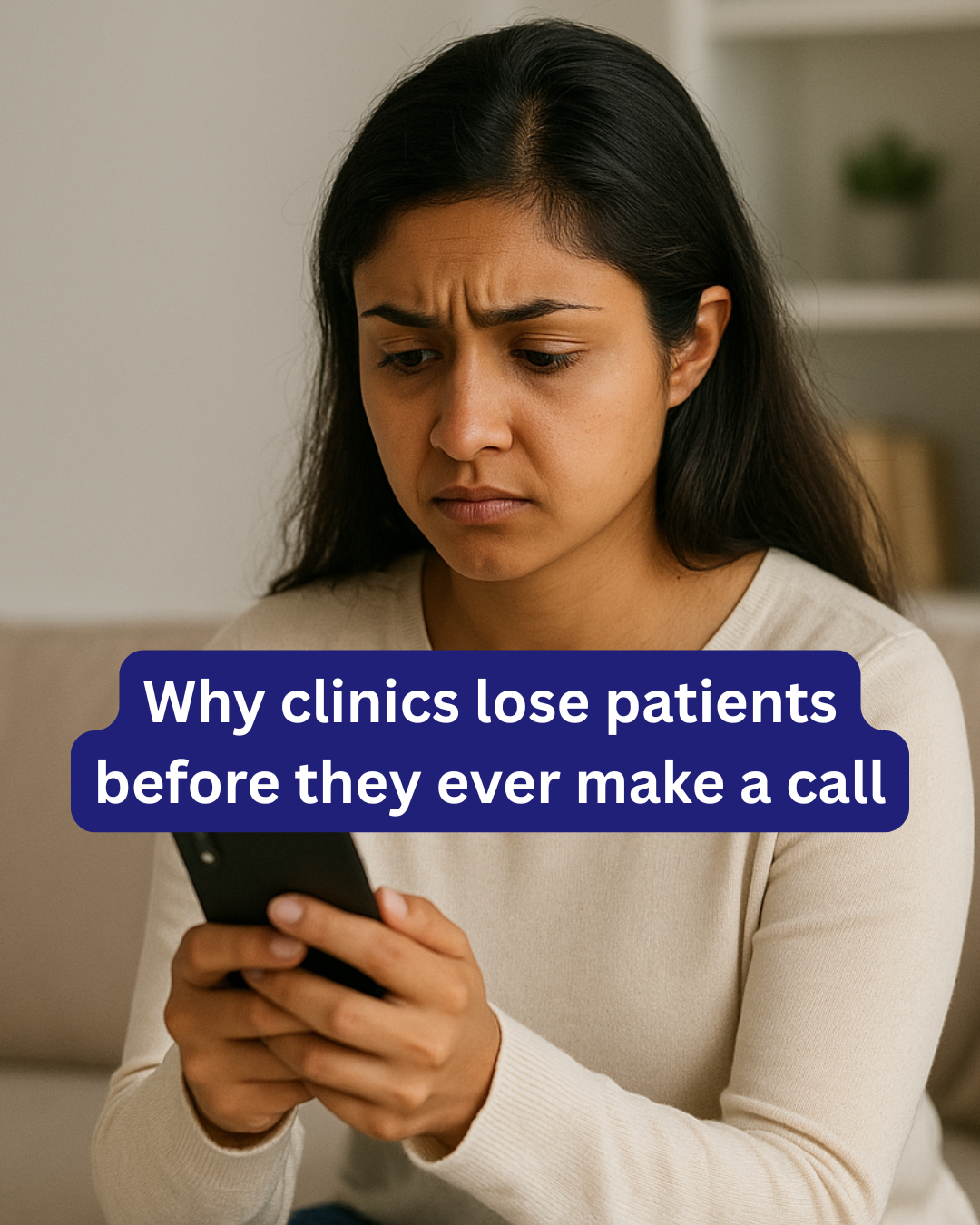
In today’s digital age, patients don’t pick a clinic the moment they need one. They research, compare, and judge silently long before they ever pick up the phone or book an appointment. Many clinics believe patients are lost because of price, location, or competition, but in reality, most patients are lost before they ever make contact.
A clinic may have excellent doctors, advanced equipment, and great service, yet still struggle with low inquiries and empty appointment slots. The problem lies not inside the clinic, but online, where first impressions are formed.
The Invisible Drop-Off: Where Clinics Lose Patients Without Knowing
Patients today behave like consumers. When searching for a doctor, they:
- Google symptoms
- Check clinic websites
- Read reviews
- Browse social media
- Compare options
- Look for trust signals.
If any part of this journey creates confusion or doubt, the patient quietly leaves without calling, without messaging, without giving feedback.
1. Poor Online Presence Creates Immediate Distrust
A clinic may have world-class care, but if the online presence is weak, patients assume the quality of care is poor too.
Common red flags that turn patients away:
- Outdated or slow website
- Poor-quality photos
- No doctor profiles
- Broken links
- No mention of services or pricing
- Medical jargon that confuses patients
In healthcare, trust is everything, and digital first impressions decide whether trust even begins.
2. Lack of Reviews or Bad Reviews Drive Patients Elsewhere
Before trusting their health to anyone, patients check what others say.
A clinic with:
- few reviews
- old reviews
- unaddressed complaints
will lose patients instantly.
Even a single negative review without a professional response can stop a patient from calling.
3. No Clear Call-to-Action (CTA)
Many clinic websites fail at something incredibly simple: telling patients what to do next.
If the website doesn’t clearly show:
- “Book Appointment”
- “Call Now”
- “WhatsApp Us”
- “Meet the Doctor”
Patients leave because they don’t know the next step.
4. Confusing or Overwhelming Information
Patients don’t understand medical complexity; they want simplicity.
Clinics often overload their website with:
- long paragraphs
- medical terms
- unclear service descriptions
Patients leave when they feel confused, overwhelmed, or unsure.
Confusion always kills conversions.
Confusion always kills conversions.
5. Slow Response Time on Social Media or WhatsApp
Even if a patient messages the clinic, slow replies cost the opportunity.
Patients expect:
- quick responses
- clarity
- helpful communication
A delay of even 10 minutes can send the patient to a competing clinic that replies instantly.
6. No Emotional Connection or Trust Signals
Patients choose a clinic not only based on skill but on feeling safe, understood, and cared for.
Clinics lose patients because:
- They don’t show doctor faces.
- They don’t share patient success stories.
- They don’t show the clinic environment.
- They don’t express their mission or values.
In healthcare, emotional reassurance matters just as much as clinical expertise.
How Clinics Can Stop Losing Patients Before They Call
Here are simple, high-impact improvements:
1. Upgrade Your Website Experience
- Clean design
- Clear navigation
- Service pages
- Fast loading speed
- Visible CTAs
2. Build Strong Doctor Profiles
Include:
- credentials
- years of experience
- specialties
- a friendly photo
This builds instant trust.
3. Collect and Highlight Reviews
Make reviews part of your online strategy:
- Google reviews
- Website testimonials
- Video testimonials
4. Simplify Your Messaging
Make your communication:
- easy to understand
- patient-friendly
- outcome-focused
5. Ensure Fast & Professional Response Times
Use:
- WhatsApp autoresponders
- Social media quick replies
- A dedicated receptionist or coordinator
6. Show Social Proof
Share:
- patient stories
- clinic photos
- doctor introductions
- behind-the-scenes content
People trust what they can see.
Final Thought
Most clinics don’t lose patients because of poor medical care; they lose them because of poor digital communication, unclear online identity, and lack of trust-building content.
Before a patient ever visits your clinic, they visit your digital clinic.
If that first impression fails, the patient is gone, and you never even know they existed.
If that first impression fails, the patient is gone, and you never even know they existed.