For most doctors, time is the scarcest resource. Between patient consultations, medical documentation, follow-ups, admin work, and professional development, their schedules are packed from morning to night. Yet, despite their expertise, many doctors still spend hours on tasks that could easily be automated.
Today, automation tools are transforming how healthcare professionals manage their time. In fact, the right automation systems can save doctors 8 or more hours every week that can be redirected toward patient care, specialization, rest, or personal growth.
Here’s how automation is reshaping modern medical practice and helping doctors reclaim valuable hours.
1. Automated Appointment Scheduling Reduces No-Shows and Manual Coordination
One of the biggest time drains in clinics is appointment management. Manually coordinating patient schedules, sending reminders, and rescheduling missed visits eats up hours of administrative effort.
Automation tools now handle:
- Online appointment booking
- Automatic reminders via SMS and email
- Rescheduling and cancellation workflows
- Waitlist management
This not only reduces no-shows by up to 40% but also frees doctors and staff from constant back-and-forth communication. With automated scheduling, doctors save at least 1–2 hours per week.
2. Digital Documentation and AI-Assisted Notes Save Hours of Charting
Medical documentation is essential but time-consuming. Many doctors report spending as much time charting as they do seeing patients.
AI-powered documentation tools can:
- Transcribe consultations
- Summarize patient visits
- Generate structured notes
- Auto-fill common medical forms
- Suggest ICD codes and medical terminology.
What once took 10–12 minutes per patient can now take 2–3 minutes, saving doctors 3–5 hours per week, depending on patient volume.
3. Automated Follow-Up and Patient Education Improve Compliance
Doctors often spend hours calling patients for follow-ups, sharing instructions, or explaining post-treatment care. Automation now handles these workflows effortlessly.
Automated tools can send:
- Follow-up reminders
- Medication alerts
- Test result notifications
- Educational videos or PDFs
- Progress check-ins
This elevates patient compliance while saving doctors and their staff from repetitive communication tasks. On average, this automation frees up 1 hour per week.
4. Billing and Insurance Automation Reduces Administrative Hassle
Billing errors, claim submissions, approvals, and insurance checks are another silent time thief in healthcare practices. Manual financial processes can slow clinics down and lead to costly mistakes.
Automation now offers:
- Auto-generated invoices
- Instant insurance verification
- Faster claim submission
- Error-detection for coding inconsistencies
This reduces stress on staff and ensures smoother operations. Doctors typically save 30 minutes to 1 hour per week simply by reducing back-and-forth paperwork.
5. Social Media and Content Automation Help Doctors Stay Visible
With online visibility becoming a key part of modern medical branding, doctors often feel pressure to post consistently on social media. But creating, writing, and publishing content manually takes time.
AI-driven systems can:
- Generate content ideas
- Write captions and scripts.
- Design visuals
- Schedule posts
- Analyze engagement
This allows doctors to build a strong online presence without sacrificing their clinical time. This automation saves 1–2 hours per week while growing their digital authority.
6. Task Automation Improves Team Coordination
From staff communication to daily workflows, automation ensures nothing falls through the cracks.
Tools like automated checklists, AI-based task managers, and workflow triggers reduce confusion and improve efficiency.
Tools like automated checklists, AI-based task managers, and workflow triggers reduce confusion and improve efficiency.
Doctors benefit from:
- Fewer interruptions
- Fewer repeated instructions
- Smoother clinic operations
This alone can save 30–45 minutes per week.
The Real Value: More Time for What Matters
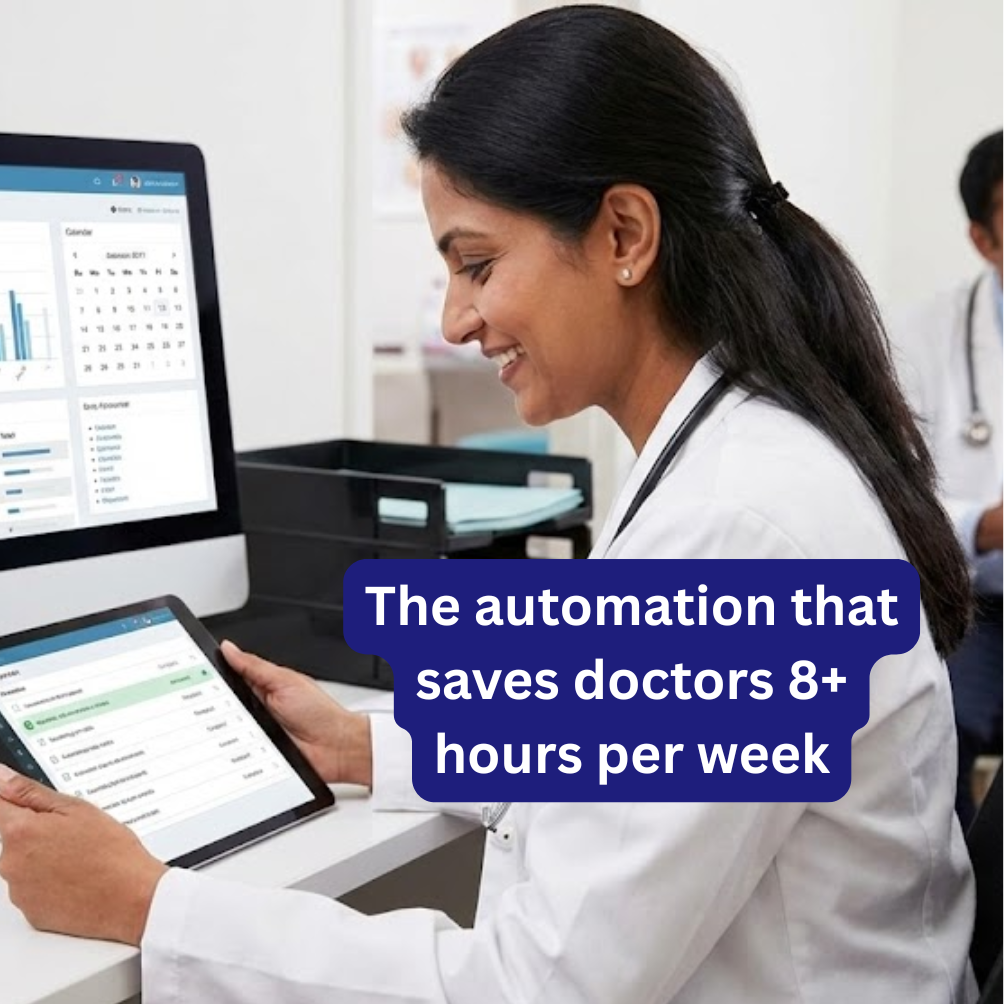
When combined, these automations save doctors 8+ hours every week, sometimes even more for busy specialists. But the real impact goes beyond time saved.
Automation provides:
- Lower stress and burnout
- More time for high-value patient interactions
- Higher patient satisfaction
- Improved clinic efficiency
- Space for growth, learning, and innovation
Most importantly, it gives doctors something priceless: more control over their time.
Final Thoughts
Automation isn’t about replacing doctors; it’s about supporting them. By handling repetitive tasks, AI and digital tools free up mental and emotional bandwidth, allowing healthcare professionals to operate at their highest level.
Doctors who embrace automation early will not only save hours but also deliver better care, enjoy a better work-life balance, and future-proof their practice.