Medical professionals today are under constant pressure. Between patient care, documentation, administrative tasks, continuous learning, and compliance requirements, doctors and healthcare teams often find themselves overwhelmed. Time is limited, and burnout is becoming increasingly common.
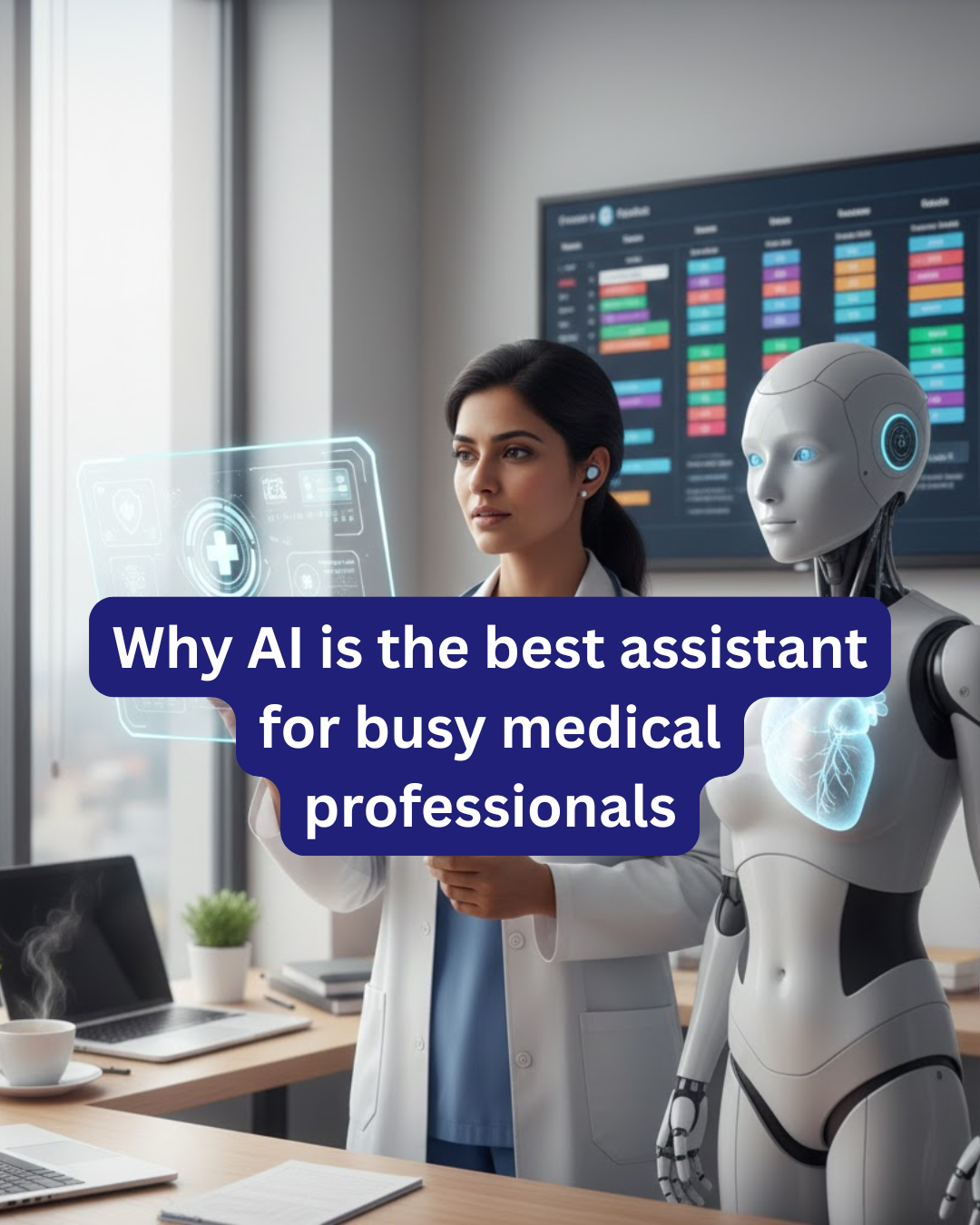
This is where artificial intelligence (AI) is proving to be a powerful solution. Not as a replacement for doctors but as a reliable assistant that helps them work smarter, faster, and more efficiently.
1. Reducing Administrative Burden
One of the biggest challenges for medical professionals is administrative work. Writing notes, managing records, scheduling appointments, and handling follow-ups consume hours every day.
AI-powered tools can automate:
- Medical documentation and transcription
- Appointment scheduling and reminders
- Prescription management and follow-up notifications
By reducing paperwork, AI allows doctors to focus on what truly matters: patient care.
2. Enhancing Clinical Decision Support
AI can analyze large volumes of medical data in seconds. From patient history to lab results and imaging data, AI systems help identify patterns that may otherwise go unnoticed.
These tools support doctors by:
- Providing evidence-based treatment suggestions
- Flagging potential risks or drug interactions
- Assisting in the early detection of conditions
AI does not make decisions independently; it enhances clinical judgment with data-backed insights.
3. Improving Patient Communication
Clear communication builds trust and improve outcomes, but time constraints often limit patient interactions.
AI assistants can help by:
- Generating easy-to-understand patient summaries
- Answering routine patient questions via chat systems
- Sending post-visit care instructions and reminders
This ensures patients feel informed and supported, even outside clinic hours.
4. Supporting Continuous Medical Learning
Medicine evolves rapidly. Staying updated with new research, guidelines, and treatments is essential but challenging.
AI can:
- Summarize medical journals and research papers.
- Highlight relevant updates based on specialization.
- Assist in case-based learning and decision review.
This helps doctors stay current without spending excessive time on reading and research.
5. Increasing Practice Efficiency and Revenue
Efficient practices lead to better patient experiences and improve financial performance.
AI helps optimize operations by:
- Reducing missed appointments through smart reminders
- Improving patient flow and scheduling efficiency
- Identifying gaps in care or follow-up opportunities
When systems run smoothly, both patients and professional’s benefit.
6. Reducing Burnout and Mental Load
Burnout among medical professionals is a serious concern. Long working hours, administrative overload, and constant decision-making take a toll.
AI acts as a supportive assistant by:
- Handling repetitive tasks
- Reducing cognitive overload
- Allowing a better work-life balance
When doctors feel supported, they can deliver higher-quality care consistently.
7. Ethical and Responsible Use of AI in Healthcare
AI in healthcare must be used responsibly. Patient privacy, data security, and ethical boundaries are critical.
The best AI systems are designed to:
- Comply with healthcare regulations.
- Maintain patient confidentiality
- Support, not replace, medical professionals.
Used correctly, AI strengthens trust rather than undermining it.
Final Thoughts
AI is not about replacing doctors. It is about empowering them.
For busy medical professionals, AI serves as a reliable assistant that handles time-consuming tasks, supports better decision-making, and improves patient communication. By embracing AI responsibly, doctors can reclaim time, reduce stress, and focus on what truly defines their profession, providing compassionate, high-quality care.
In the future of healthcare, the most effective professionals will not be those who work the hardest but those who work the smartest with AI by their side.