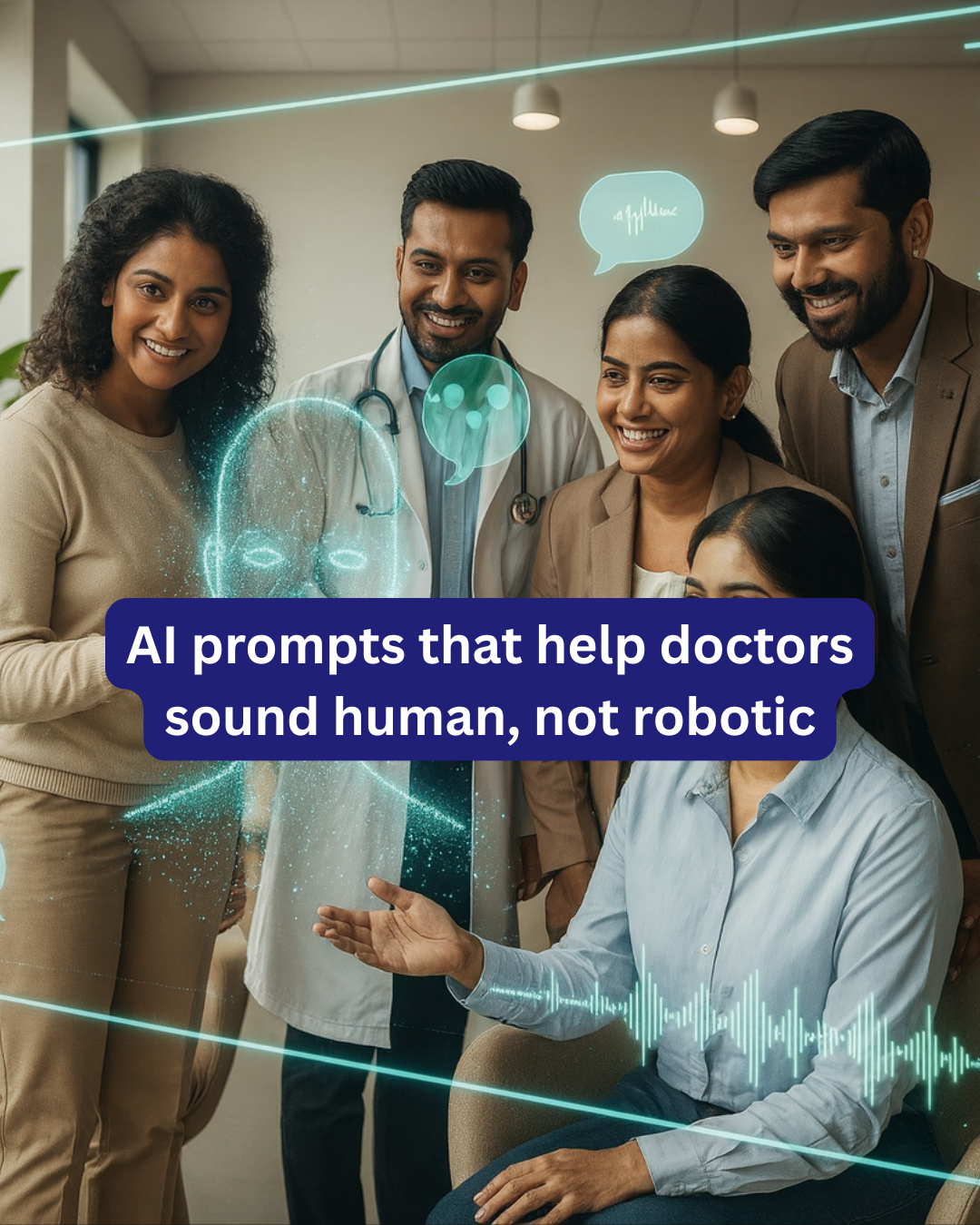
Artificial intelligence is becoming part of everyday medical practice. Doctors now use AI to draft emails, create patient education material, write blogs, and assist with communication. While AI saves time, many doctors worry about one thing sounding robotic or impersonal.
Patients value empathy, clarity, and reassurance. The good news is that AI can sound human when it is guided correctly. The key lies in how doctors write prompts.
Why Tone Matters in Medical Communication
Healthcare communication is emotional. Patients are often anxious, confused, or vulnerable. A robotic or overly technical tone can create distance and reduce trust.
When communication sounds human:
- Patients feel heard and respected.
- Instructions are easier to understand
- Trust builds faster
AI should support human connection, not replace it.
The Problem with Generic AI Prompts
Many doctors use vague prompts like:
- “Write a patient message.”
- “Explain this condition.”
- “Create a follow-up email.”
These prompts produce content that is correct but cold. AI mirrors the instructions it receives. Without emotional direction, it defaults to neutral, generic language.
To sound human, prompts must guide tone, intent, and audience.
Principles for Writing Human-Sounding AI Prompts
Before looking at examples, doctors should keep these principles in mind:
- Specify who the message is for
- Mention the emotional state of the patient.
- Ask for simple, conversational language.
- Request empathy and reassurance.
These small details dramatically change the output.
AI Prompts That Help Doctors Sound More Human
Below are practical prompt examples doctors can use in daily communication.
1. Patient Follow-Up Message
Prompt:
Write a warm, reassuring follow-up message from a doctor to a patient after their first consultation. Use simple language, empathy, and a calm tone.”
Write a warm, reassuring follow-up message from a doctor to a patient after their first consultation. Use simple language, empathy, and a calm tone.”
2. Explaining a Diagnosis
Prompt:
“Explain this diagnosis to a patient in clear, non-medical language. Sound supportive and reassuring, as if speaking to someone who feels anxious.”
“Explain this diagnosis to a patient in clear, non-medical language. Sound supportive and reassuring, as if speaking to someone who feels anxious.”
3. Appointment Reminder
Prompt:
“Create a friendly appointment reminder message that sounds caring, not automated. Keep it short and polite.”
“Create a friendly appointment reminder message that sounds caring, not automated. Keep it short and polite.”
4. Post-Treatment Care Instructions
Prompt:
“Write post-treatment care instructions in a human, conversational tone. Avoid medical jargon and focus on clarity and reassurance.”
“Write post-treatment care instructions in a human, conversational tone. Avoid medical jargon and focus on clarity and reassurance.”
5. Educational Content
Prompt:
Write a short educational article for patients in a friendly, conversational tone. Sounds like a doctor who wants to help, not lecture.”
Write a short educational article for patients in a friendly, conversational tone. Sounds like a doctor who wants to help, not lecture.”
How AI Supports, Not Replaces, Doctor Empathy
AI should never replace personal interaction. Instead, it helps doctors save time on repetitive writing while maintaining quality communication.
Doctors remain responsible for:
- Reviewing AI-generated content
- Adjusting tone when needed
- Ensuring medical accuracy
When used thoughtfully, AI becomes a communication assistant, not a barrier.
Benefits of Human-Sounding AI Communication
Doctors who use AI effectively experience:
- Better patient understanding
- Stronger patient trust
- Reduced communication fatigue
- More time for clinical care
Human-centered AI communication strengthens doctor-patient relationships rather than weakening them.
Final Thoughts
AI does not have to sound robotic. With the right prompts, doctors can maintain warmth, empathy, and professionalism while saving valuable time.
The future of healthcare communication is not artificial; it is human, supported by intelligent tools. Doctors who learn to guide AI thoughtfully will communicate better, connect deeper, and care more effectively.