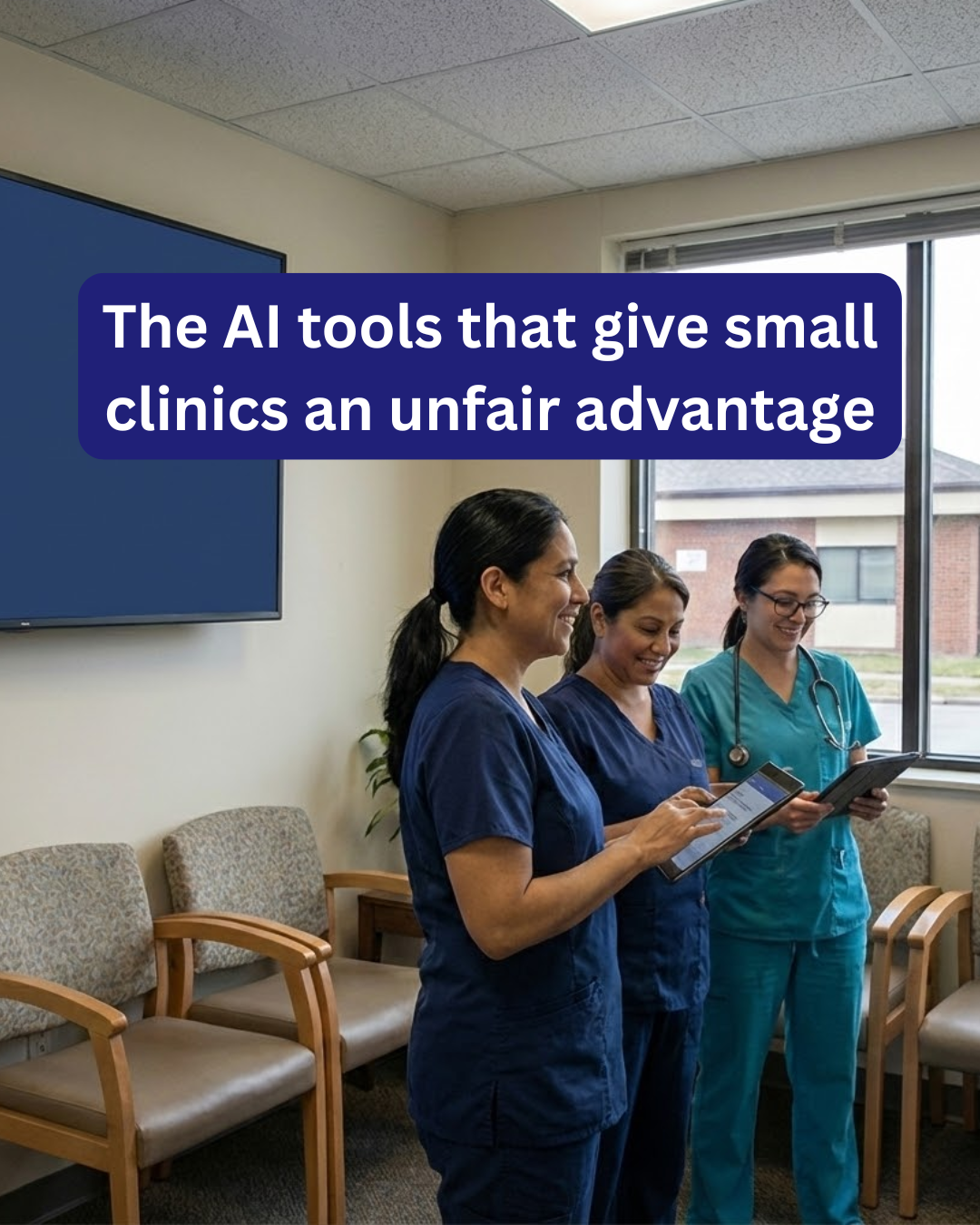
Small clinics often compete with large hospitals and corporate healthcare chains that have bigger teams, larger budgets, and stronger brand recognition. However, technology has changed the playing field. Today, AI tools give small clinics an unfair advantage by enabling them to operate smarter, faster, and more efficiently than ever before.
When used strategically, AI allows small clinics to deliver high-quality patient experiences without the overhead of large organizations.
1. AI-Powered Appointment Scheduling and Reminders
Missed appointments cost clinics time and revenue. AI-based scheduling tools automate bookings, confirmations, and reminders across multiple channels such as SMS, email, and WhatsApp.
These tools help small clinics:
- Reduce no-show rates
- Optimize doctor schedules
- Improve patient convenience
Automated scheduling ensures that clinics run smoothly without additional administrative staff.
2. AI Chatbots for Patient Communication
AI chatbots act as 24/7 digital front desks. They handle common patient queries, appointment requests, and follow-ups—even outside clinic hours.
For small clinics, chatbots:
- Improve response times
- Reduce front-desk workload
- Enhance patient satisfaction
By providing instant, accurate responses, AI chatbots create a professional experience comparable to large institutions.
3. AI Tools for Medical Documentation
Documentation is one of the biggest time drains for doctors. AI-powered transcription and note-generation tools convert conversations into structured medical records.
These tools:
- Save hours of manual documentation
- Improve record accuracy
- Reduce doctor burnout
Small clinics benefit by spending more time on patient care and less on paperwork.
4. AI-Driven Patient Engagement and Follow-Ups
Patient engagement doesn’t end after a consultation. AI tools automate follow-up messages, care instructions, and health reminders.
This leads to:
- Better treatment adherence
- Stronger patient relationships
- Higher retention rates
Consistent engagement helps small clinics build loyalty without constant manual effort.
5. AI for Local Marketing and Visibility
AI-powered marketing tools help small clinics improve local visibility by optimizing search presence, managing reviews, and generating content.
These tools assist with:
- Local SEO optimization
- Review monitoring and responses
- Educational content creation
AI helps clinics attract the right patients without relying on expensive marketing agencies.
6. AI Analytics for Smarter Decisions
AI analytics tools track patient behavior, appointment trends, and operational performance.
For small clinics, insights include:
- Peak appointment times
- Patient drop-off points
- Opportunities for service improvement
Data-driven decisions help clinics grow strategically rather than reactively.
7. Ethical and Responsible AI Use in Small Clinics
Using AI responsibly is essential in healthcare. Clinics must prioritize patient privacy, data security, and ethical guidelines.
When implemented correctly, AI supports—not replaces—medical professionals. It enhances efficiency while maintaining the human touch that defines quality healthcare.
Final Thoughts
AI is no longer a luxury reserved for large healthcare organizations. It is a powerful equalizer.
The AI tools that give small clinics an unfair advantage help them deliver better experiences, operate efficiently, and compete confidently in a crowded healthcare market. Clinics that adopt AI thoughtfully today will be the ones leading tomorrow.