In a world where patients search online before they call, trust signals for doctors’ websites matter more than ever. The moment a potential patient lands on your site, they decide, often in seconds, whether to book an appointment. Small trust signals help answer the single most important question visitors ask: Can I trust this doctor with my health? When those signals are clear and consistent, conversions rise.
Why tiny trust signals matter
Visitors do not read every paragraph. They scan. They look for quick, reassuring cues that reduce uncertainty. A simple profile photo, a short testimonial, or a visible contact number acts like a handshake. These micro-assurances reduce the perception of risk and increase patients’ likelihood of booking an appointment. In other words, small trust signals create confidence, and confidence converts.
Which trust signals move the needle
1. A professional, friendly photo and short bio
A clear, high-quality photo and a 1–2 sentence bio that mentions your specialty and years of experience is one of the easiest trust signals for doctors’ websites to implement. It humanizes you and sets realistic expectations. Patients are more likely to contact a doctor they can picture meeting.
2. Short, specific patient testimonials
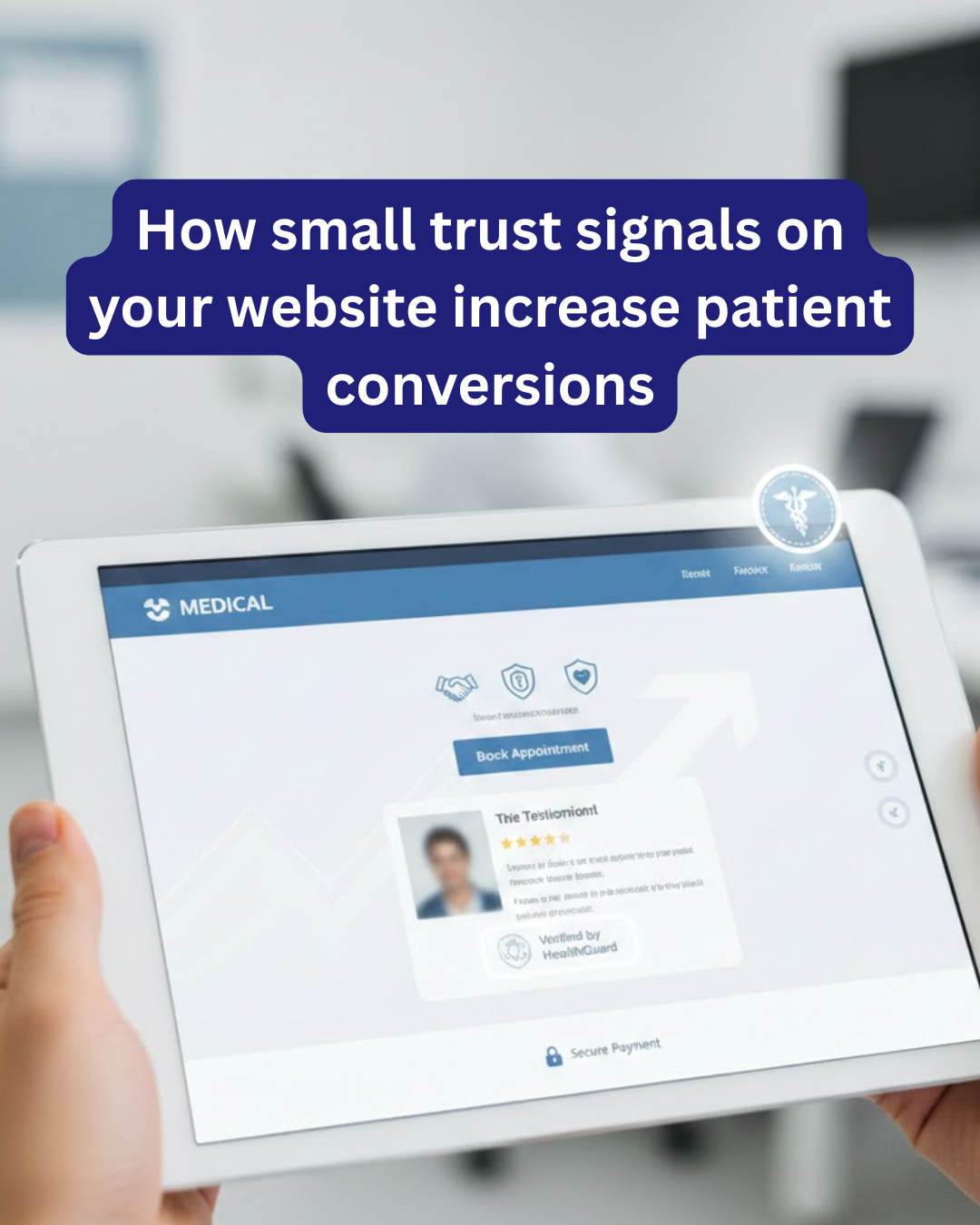
Social proof works. Short testimonials that mention outcomes, wait times, staff behavior, or the consultation experience feel authentic. Place testimonials near your call to action, for example, next to the Book Appointment button, to increase conversions.
3. Clear credentials and affiliations
List degrees, certifications, fellowships, and professional memberships in a visible spot. Even brief lines such as “10 years of clinical experience” or “Member, Indian Medical Association” are effective trust signals for doctors’ websites. They establish authority without overwhelming the reader.
4. A simple and transparent booking process
Complicated booking forms frustrate visitors. A prominent Book Appointment button, followed by a short, step-by-step booking flow, reduces abandonment. Provide clear information on fees, consultation length, and what to bring. Transparency is a trust signal that reduces hesitation.
5. Clinic photos and what to expect
Real images of your waiting area, consultation room, and staff make first visits less intimidating. Patients often book when they can picture the environment. These visuals act as practical trust signals for doctors’ websites by reducing fear and building familiarity.
6. Practical FAQs and patient information
A short FAQ that answers questions about insurance, parking, teleconsultation, and the first visit is a high-impact trust signal. It shows you understand common concerns and respect the patient’s time. A concise FAQ reduces friction and increases the likelihood of booking.
7. Visible contact details and secure site indicators
A clearly visible phone number and address, along with HTTPS and a short privacy note, are basic but powerful trust signals. They show that you are reachable and that patient information is handled securely. Many visitors will only convert if these elements are obvious.
How to prioritize improvements
Start with the low-effort, high-impact items: add a professional photo and short bio, place 2–3 short testimonials near your CTA, and make the Book Appointment button visible on every page. Next, add credentials, a compact FAQ, and clinic photos. Finally, check site security and add a brief privacy statement.
Final thought
Small changes produce big results because trust is built from many tiny confirmations. Trust signals for doctors’ websites are not marketing extras; they are practical tools that reduce patient anxiety and speed decisions. Make your website reassuring, make it clear, and conversions will follow.