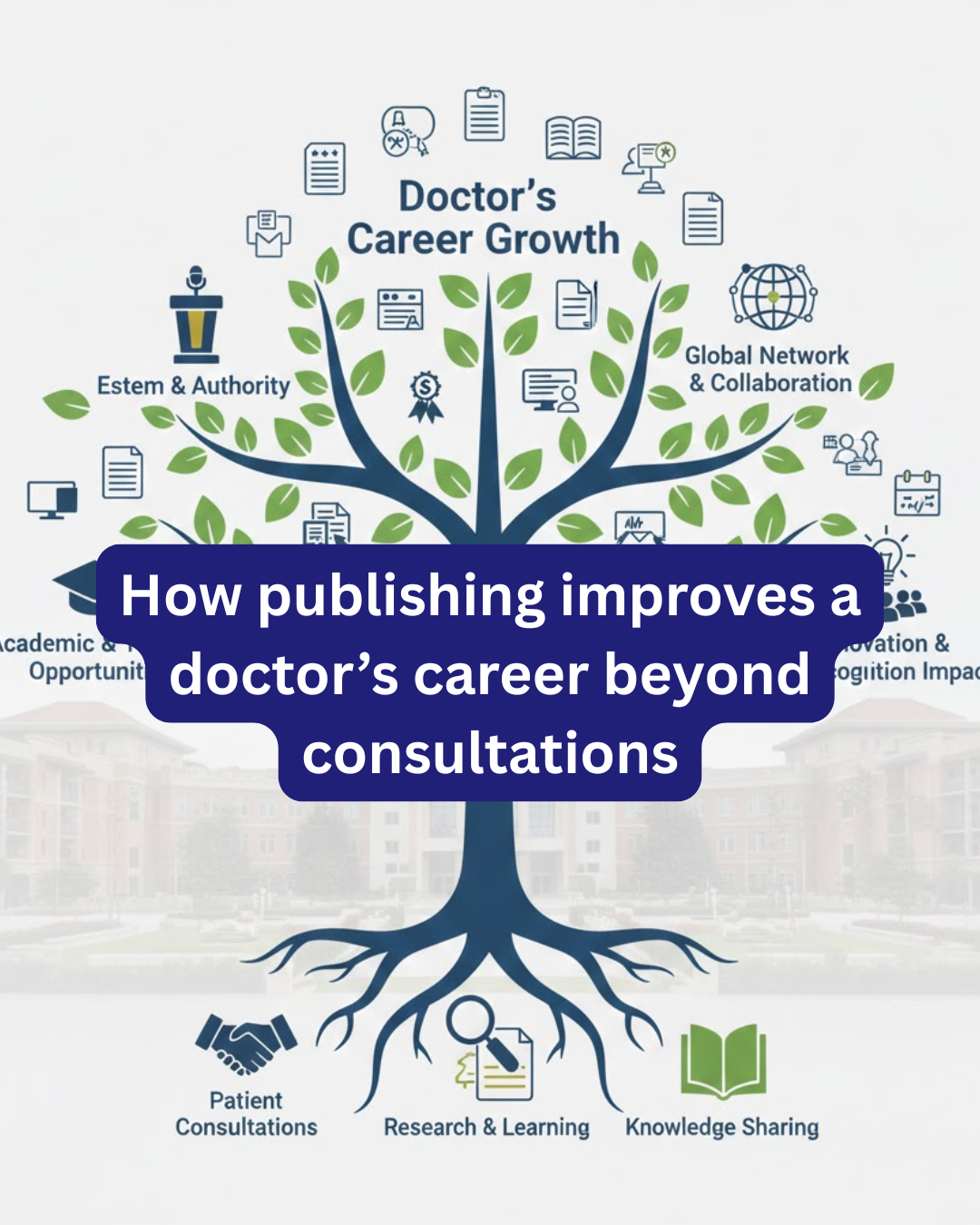
Publishing improves a doctor’s career by extending professional growth beyond daily consultations. For many doctors, career growth is traditionally measured by patient volume, clinical outcomes, and years of experience. While consultations remain the core of medical practice, publishing medical content helps doctors build authority, credibility, and long-term career growth beyond the clinic.
1. Publishing Establishes Professional Authority
When doctors publish articles, blogs, or research-based content, they position themselves as thought leaders in their field. Publishing demonstrates expertise publicly, not just privately in a consultation room.
Patients, peers, and institutions perceive published doctors as more credible because their knowledge is visible and accessible. Over time, consistent publishing builds a reputation that precedes the doctor, creating recognition beyond immediate patient interactions.
2. It Builds Trust Before the First Appointment
Patients often research doctors online before booking. Published content allows patients to understand a doctor’s thinking, communication style, and values in advance.
Educational articles reduce anxiety by answering common questions and explaining conditions in simple language. When patients feel informed and reassured, they arrive at consultations with greater trust—often already confident in the doctor’s expertise.
3. Publishing Expands Career Opportunities
Doctors who publish regularly open doors beyond clinical practice.
Publishing can lead to:
- Speaking opportunities at conferences
- Invitations to panels and discussions
- Media features and expert interviews
- Academic and advisory roles
Visibility through publishing creates opportunities that are not limited by clinic hours, enabling professional growth on a broader scale.
4. It Strengthens Referral Networks
Other healthcare professionals are more likely to refer patients to doctors whose expertise is clearly demonstrated.
When peers read well-written, insightful medical content, they gain confidence in the doctor’s knowledge and approach. Publishing helps doctors become the “go-to” expert for specific conditions or treatment philosophies, strengthening professional networks naturally.
5. Publishing Improves Communication Skills
Writing regularly sharpens a doctor’s ability to explain complex medical topics clearly and concisely.
This improved clarity carries into consultations, making patient interactions more effective and efficient. Doctors who publish often communicate with more confidence, structure, and empathy skills that enhance overall clinical practice.
6. It Creates Long-Term Digital Assets
Unlike consultations, which are time-bound, published content continues to work long after it is created.
Blogs, articles, and educational resources remain searchable and relevant, helping doctors build a lasting digital footprint. Over time, this content compounds in value, attracting patients, peers, and opportunities continuously.
7. Publishing Supports Ethical Personal Branding
Publishing is not about promotion; it is about education.
Doctors who share knowledge ethically build personal brands rooted in trust and service. Thoughtful publishing aligns with medical ethics while allowing doctors to express their philosophy of care, values, and expertise authentically.
Final Thoughts
Publishing allows doctors to grow professionally without being limited to the number of consultations they can handle.
By sharing knowledge, insights, and experience through publishing, doctors extend their influence, strengthen trust, and unlock new career opportunities. In a digital-first healthcare world, publishing is not an extra it is a strategic investment in long-term professional growth.